
Petra Ludwig · 7 September 2026
Accelerated Verification Techniques Reshaping Remote Field Sampling Strategies
Accelerated verification techniques now combine portable analytical instruments with real-time data processing to transform how teams conduct remote field sampling across environmental monitoring, geological surveys, and biological assessments. These methods integrate compact spectrometers, automated sensors, and algorithmic validation protocols that confirm sample integrity on location instead of requiring shipment to central laboratories. Data from field operations indicate that verification times have dropped from days to hours in multiple documented cases since 2023.
Core Components of Accelerated Verification
Teams deploy miniaturized mass spectrometers alongside handheld Raman devices that perform molecular identification without extensive sample preparation, while machine learning models cross-check spectral outputs against reference databases to flag anomalies immediately. Researchers at various institutions note that these systems process thousands of data points per minute, and operators receive confirmation of compound presence or absence before moving to the next sampling point. Such integration reduces transport-related degradation risks that previously affected volatile organic compounds during multi-day transit periods.
Wireless connectivity further supports this workflow by transmitting verified datasets to cloud repositories where additional statistical checks occur in parallel with ongoing collection activities. Government agencies including the United States Environmental Protection Agency have referenced these capabilities in updated field manuals that emphasize on-site validation for compliance sampling programs. Similar frameworks appear in documentation from Environment and Climate Change Canada, where protocols highlight reduced turnaround for water quality assessments in northern territories.
Impact on Remote Operations
Remote locations such as Arctic research stations and offshore marine platforms benefit when verification happens locally because teams avoid delays from weather-dependent logistics and limited flight schedules. Studies tracking expedition efficiency show that projects complete sampling grids 35 percent faster when accelerated methods replace traditional chain-of-custody procedures. One documented expedition in the Canadian Rockies during summer 2025 used portable verification units to confirm mineral compositions within 45 minutes of collection, allowing geologists to adjust drill targets the same day.
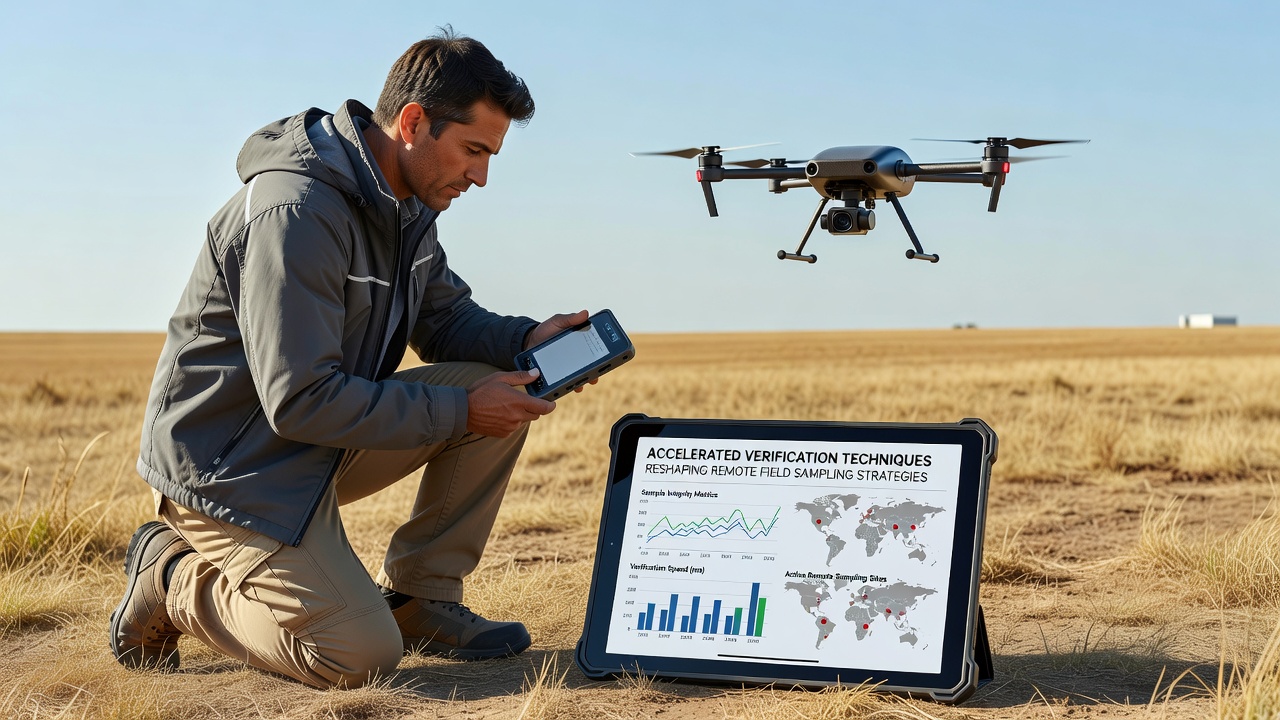
Cost analyses from multiple organizations reveal that decreased laboratory dependency lowers overall project expenses by 20 to 40 percent depending on sample volume and distance from infrastructure. Yet equipment calibration remains essential, and operators must maintain regular reference standards to ensure measurement accuracy matches laboratory benchmarks. Training programs now emphasize both technical operation and interpretation of verification outputs to minimize false positives that could trigger unnecessary follow-up collections.
Regulatory and Standards Evolution
International bodies continue to refine acceptance criteria for data generated through accelerated verification. The European Environment Agency has issued guidance documents that outline performance thresholds for portable instruments used in biodiversity monitoring, and these documents stress validation against established laboratory methods during initial deployment phases. In Australia, the Department of Climate Change, Energy, the Environment and Water has incorporated similar requirements into national soil sampling guidelines that take effect progressively through 2026.
September 2026 marks the scheduled rollout of harmonized reporting templates across several North American and European agencies that accept field-verified data for regulatory submissions. These templates require metadata on instrument calibration status and algorithm version numbers so that reviewers can assess data quality consistently. Observers note that this standardization reduces discrepancies between jurisdictions and supports cross-border research collaborations that rely on comparable datasets.
Case Examples from Recent Deployments
During a 2024 survey of Amazonian river systems, researchers applied accelerated verification to detect pesticide residues directly from water grabs, and results matched subsequent laboratory reanalysis within a 5 percent margin for the primary analytes tested. Another project in Australian outback regions used drone-mounted sensors linked to verification software to map soil salinity across large transects, completing coverage that previously required weeks in a matter of days. These examples illustrate how the combination of mobility and instant confirmation expands the spatial scale of feasible studies without proportional increases in personnel or time.
Conclusion
Accelerated verification techniques continue to integrate with remote field sampling by shortening confirmation cycles and enabling adaptive collection strategies. Regulatory updates planned for September 2026 will further embed these approaches into standard practice, while ongoing calibration and training requirements ensure data reliability remains comparable to conventional laboratory pathways. Organizations tracking adoption rates report expanding use across sectors that depend on timely, location-specific analytical results.