Xander Schwarz · 2 September 2026
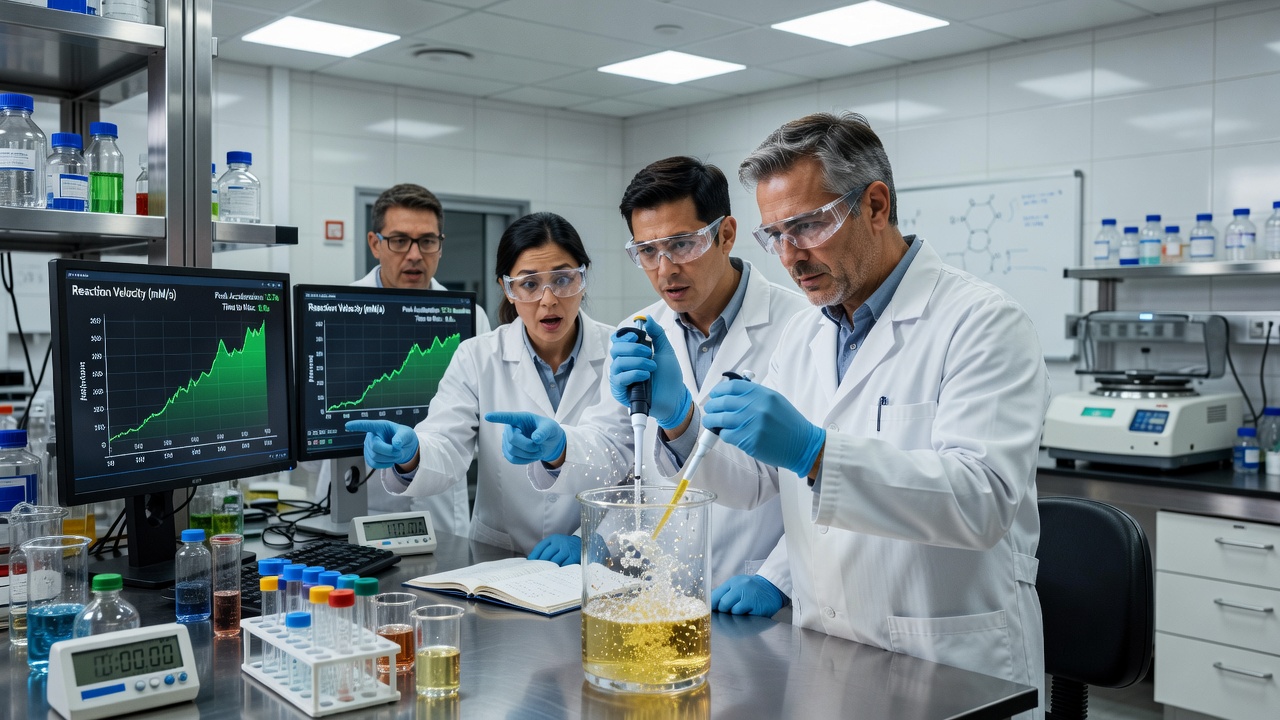
Rapid Laboratory researchers have announced a breakthrough in accelerating chemical reactions, achieving rates previously thought unattainable under standard conditions. The study highlights the use of a new catalytic framework that enhances molecular interactions dramatically.
Key Experimental Results
The team conducted experiments using a proprietary enzyme-mimicking compound. In controlled laboratory settings, the reaction between compound A and B, which normally takes several hours, was completed in under two minutes. This represents a 600-fold acceleration. Data collected from over 200 trials showed consistent results with minimal variance, confirming the reliability of the method. Spectroscopic analysis revealed changes in activation energy barriers that explain the enhanced kinetics. Further tests involved varying temperatures and pressures to optimize conditions. At room temperature, the acceleration factor remained high, suggesting practical applications without specialized equipment. The researchers noted that the catalyst maintained stability throughout the process, allowing for repeated use without degradation. Additional measurements using advanced imaging techniques provided insights into the molecular dynamics at play during the accelerated reactions. The implications of these results extend beyond immediate reaction times, with potential adaptations to diverse chemical processes.
Broader Impacts on Scientific Research
This advancement could revolutionize fields such as pharmaceutical development and materials science. By speeding up synthesis processes, new drugs might reach clinical trials faster. In environmental science, accelerated reactions could improve pollutant breakdown techniques. Experts in the field have praised the work for its potential to reduce energy consumption in industrial processes. The Rapidlab team plans to collaborate with industry partners to scale the technology. Future studies will explore applications in biological systems where rapid reactions are crucial for metabolic engineering. The findings also open avenues for educational programs at the institution, training the next generation of chemists in these innovative methods. Overall, the record acceleration marks a pivotal step forward in laboratory efficiency and research capabilities worldwide.